Growth Is Not a Destination
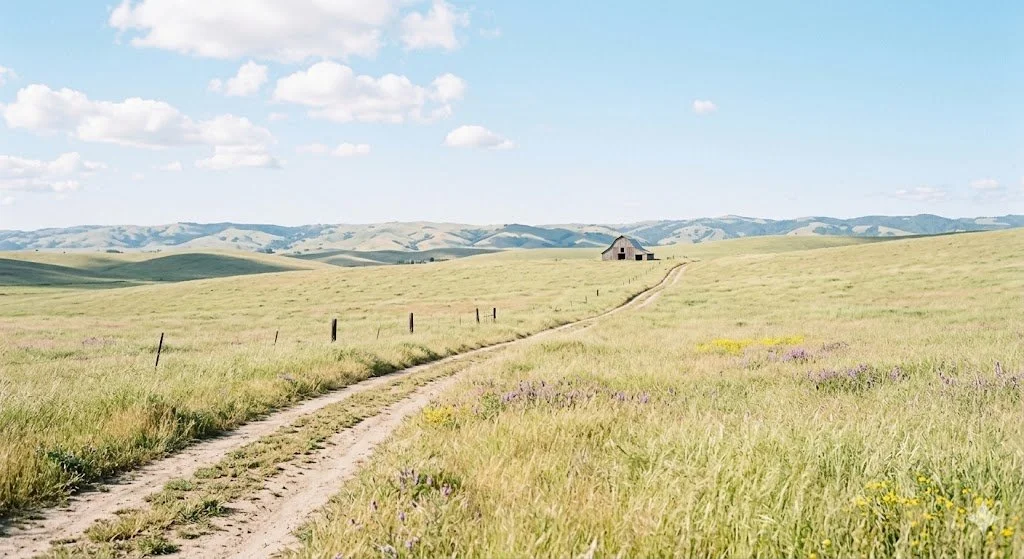
We have been sold a finish line that does not exist.
It shows up everywhere. In the language we use around success — when I finally get there, when we hit that number, when the program launches, when the team is fully staffed, when the debt is paid, when the kids are grown, when the organization reaches the next level. In the metrics we celebrate and the milestones we chase and the quiet, persistent belief that somewhere just ahead of where we are right now, there is a place called arrived where things finally feel stable and sustainable and the way they were always supposed to feel.
And so we push. We build. We sacrifice margin and rest and reflection in service of forward motion because forward motion feels like progress and progress feels like we are getting closer to the place where we can finally exhale.
Except we never quite get there.
And after long enough chasing a finish line that keeps moving, one of two things happens.
We burn out trying to reach it. Or we reach something that looks like it and discover — quietly, disoriently, sometimes devastatingly — that arriving did not feel the way we thought it would.
Neither of those outcomes is inevitable. But avoiding them requires something most of us were never taught.
It requires a completely different understanding of what growth actually is.
The Myth of Arrival
There is a particular kind of disorientation that comes from reaching a goal you have worked toward for a long time.
The nonprofit finally hits its funding target. The business owner finally breaks through the revenue ceiling she has been staring at for three years. The individual finally gets the relationship, the house, the role, the life that was supposed to be the thing. The church finally completes the building campaign, launches the new campus, reaches the attendance number that was on the vision board.
And then — in the space where the celebration should live — there is something unexpected.
Now what?
Not because the achievement was not real. Not because the work was not worth it. But because arrival was never actually the point, and somewhere in the relentless pursuit of the finish line, nobody stopped long enough to build for what came after it.
This is not a motivation problem. It is not ingratitude or lack of vision or an inability to be satisfied. It is what happens when we treat growth as a destination rather than a direction — when we build toward a moment instead of building toward a life, a mission, a calling that is designed to keep becoming something.
The most sustainable organizations and the most whole individuals we have ever worked with share one thing in common. They stopped chasing arrival. They started building for the journey.
What Trees Know About Seasons
A tree does not stop growing when it reaches a certain height.
It does not hit a predetermined canopy width and decide it has arrived. It does not produce fruit for one season and consider its purpose fulfilled. It does not measure its success by how quickly it got from sapling to mature growth and then spend the rest of its existence maintaining what it achieved.
It grows. Season after season, year after year, in the specific and unhurried rhythm it was designed for. It goes dormant when dormancy is required — not because something is wrong, but because rest is part of the cycle. It loses leaves without losing identity. It survives drought without abandoning its root system. It bends in storms without relinquishing its hold on the ground.
And every season — every single one, including the ones that look from the outside like nothing is happening — is part of the growth.
The bare branches of winter are not failure. They are preparation. The slow, invisible root work happening underground in the dry season is not stagnation. It is the foundation for everything that comes next.
Growth is not a destination. It is a direction. A rhythm. A lifelong orientation toward becoming more fully what you were made to be — not in spite of the seasons, but through all of them.
The Burnout Nobody Talks About
There is a version of burnout that does not come from working too hard.
It comes from working hard in the wrong direction for too long. From pushing relentlessly toward a finish line without ever stopping to evaluate whether the finish line is still the right one. From building momentum without building margin. From measuring progress without measuring alignment.
We see it in the nonprofit leader who has given a decade to a mission she still believes in but can no longer sustain at the pace the organization requires. In the business owner who built exactly what he set out to build and now feels more trapped than free. In the individual who checked every box on the list she was handed and still wakes up wondering if this is really it. In the church that is growing by every measurable metric and quietly losing the culture that made it worth growing.
In every case the problem is not the vision. The problem is that growth was never designed into the structure as an ongoing, evaluated, intentionally sustained process. It was treated as a sprint toward a destination rather than a rhythm built for the long haul.
And sprints, by definition, cannot last forever.
Building for the Long Haul
Sustainable growth — the kind that does not require burning everything and everyone in service of forward motion — requires three things that most plans leave out.
It requires honest evaluation.
Not the kind of evaluation that happens in a crisis, when something has already broken down and the question is how to recover. The kind that happens regularly, intentionally, before the breakdown — that creates space to ask the hard questions while there is still margin to act on the answers. What is working. What is not. What has shifted. What needs to shift. What the current season is actually requiring and whether the current structure is built to meet it.
Honest evaluation is not pessimism. It is the most optimistic thing an individual or organization can do — because it assumes that what is found can be addressed, that what is broken can be fixed, and that the gap between current reality and future potential is always worth closing.
It requires intentional refinement.
Growth changes things. A structure that was right for where you were two years ago may not be right for where you are now. A system that served the organization at one level of complexity may be creating friction at another. A rhythm that worked for one season of life may be unsustainable in the next.
Intentional refinement means building the habit — individually and organizationally — of regularly examining the structure beneath the vision and asking whether it still fits. Not waiting until the friction becomes crisis. Not assuming that what worked before will always work. Treating the structure as a living thing that needs tending, not a fixed thing that was built once and can now be left alone.
It requires permission to change.
This is the one most people struggle with the most.
Permission to change direction without it meaning the original direction was wrong. Permission to let go of a program, a process, a commitment, or a strategy that no longer serves the mission — without it feeling like failure. Permission to enter a slower season without interpreting it as falling behind. Permission to grow differently than expected — sideways over the water instead of straight up into the sky — and trust that the direction is right even when it does not look like everyone else's growth.
Sustainable growth requires the ongoing, season-by-season permission to become more fully what you were made to be — even when that looks different than what you planned, different than what others expected, and different than what the blueprint said it was supposed to look like.
The Cyclical Nature of Real Growth
Here is what we build into every engagement at Willow & Oak — not as an afterthought but as a foundational commitment.
Review cycles.
Not annual performance reviews or quarterly check-ins that feel like obligation rather than opportunity. Genuine, structured, honest rhythms of evaluation and refinement — built into the fabric of how an individual or organization operates — that ensure the structure always keeps pace with the growth and the growth always keeps pace with the vision.
Because growth without evaluation becomes drift. Forward motion without honest reflection becomes momentum in the wrong direction. And a vision without a built-in process for asking is this still working, is this still right, is this still what we were made for — that vision is always one hard season away from losing its way.
The goal is not to create dependency on an outside perspective forever. The goal is to build the internal capacity — the habits, the rhythms, the frameworks — to evaluate and refine and adjust with the same honesty and intention that the initial work required.
So that as seasons change — and they always change — you are never caught without a way to find your footing again.
What the Next Season Requires
If you are reading this in a season of momentum, this is the moment to build the review rhythms in — before the sprint requires it, while there is still margin to do it well.
If you are reading this in a season of plateau, this is the invitation to stop pushing harder in the same direction and start asking honestly whether the structure beneath the momentum is still serving the vision it was built to carry.
If you are reading this in a season of dormancy — in the winter of something, the quiet place where it feels like nothing is happening and you are not sure what comes next — this is the reminder that bare branches are not failure. That root work is still work. That the tree does not stop being a tree because the leaves are gone.
Every season is part of the growth. Even the ones that do not look like it.
Especially those.
The Question That Changes Everything
Somewhere along the way most of us picked up the belief that the goal was to arrive. To reach the place where things were finally figured out, finally stable, finally the way they were supposed to be.
But the most alive individuals and the most impactful organizations we have ever encountered are not the ones who arrived. They are the ones who stopped waiting to arrive and started building for the ongoing, honest, intentional, season-by-season work of becoming.
They are not chasing a finish line. They are tending a root system.
They are not sprinting toward a destination. They are growing — slowly, specifically, sustainably — toward the light that is available to them in the exact place they were planted.
And the question they return to — not once, but over and over again in every season — is not are we there yet.
It is something quieter. Something more honest. Something that requires more courage than any finish line ever did.
Are we still becoming what we were made to be?
That question is not a sign of doubt. It is not evidence of instability or lack of conviction or failure to commit.
It is the most important question a growing thing can ask.
And it never stops being the right one.
Willow & Oak Collective works alongside individuals, businesses, nonprofits, churches, and ministries to bring clarity to vision, structure to calling, and sustainable systems to the work that matters most. If you are ready to stop chasing the finish line and start building for the long haul, we would love to walk alongside you.